


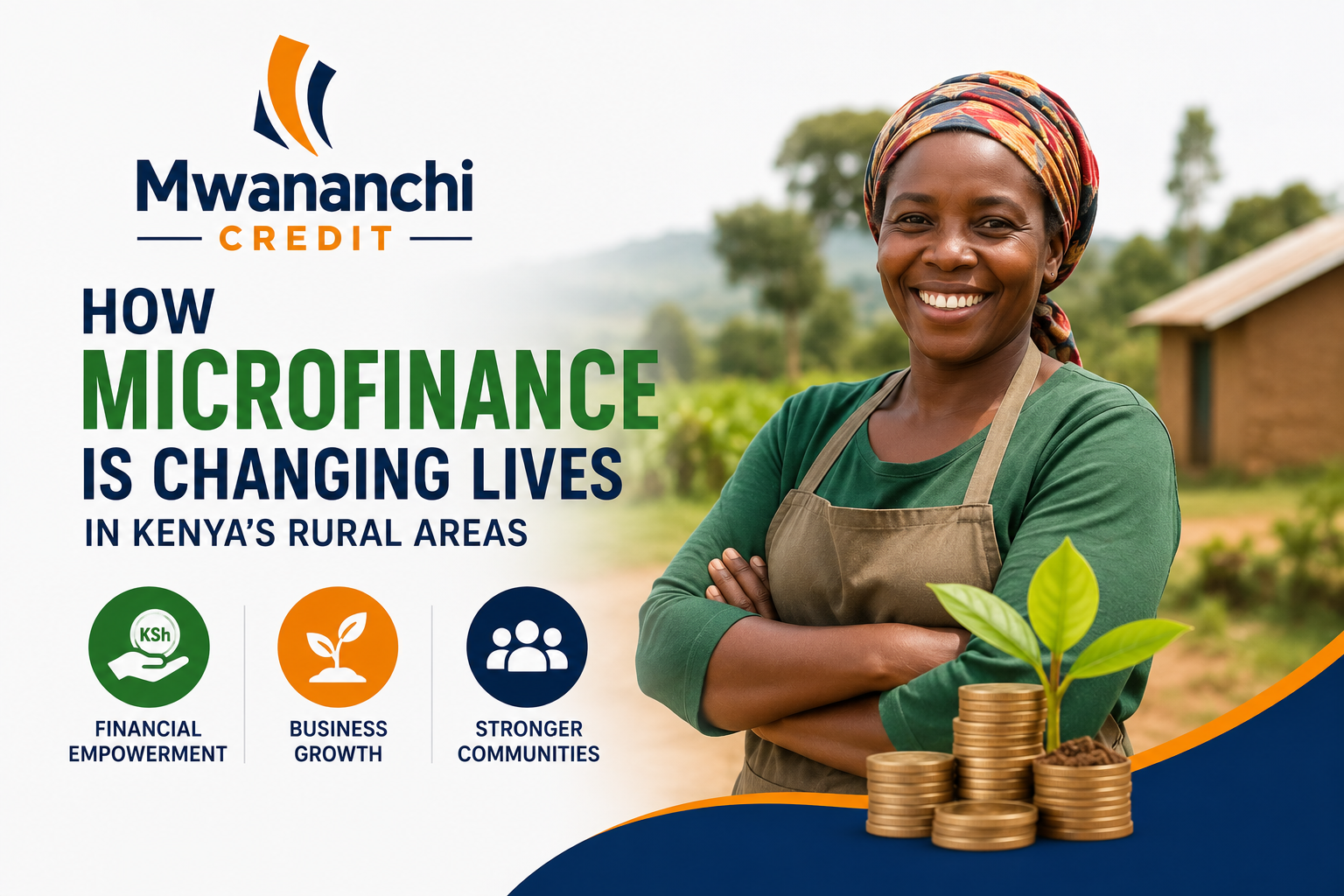
How Microfinance Is Changing Lives in Kenya’s Rural Areas
Microfinance in Kenya has also become one of the driving forces of economic change in Kenya in its rural heartland, where access to formal financial services has been a cause locked out by many informal barriers in the past. It is not about money activism: it is a grassroots revolution, but it is also about dignity, the ability to have a shot at a brighter future, and the right to pursue it in the same way that other people do.
Breaking Traditional Banking Barriers
Almost 73 per cent of the Kenyan population resides in rural settlements where people mostly rely on farming and small scale enterprises that have fluctuating and uncertain revenue. These communities exist on the margins of traditional banks that demand permanent employment and collateral. Microfinance institutions in Kenya work differently because they employ group lending systems, social collateral and community-based analysis of risks to lend money to people who have never got such money before.
The effect is instant and severe. Small-scale farmers are able to get good seeds and fertilizers ahead of the planting season and rural entrepreneurs can invest in inventory, livestock or productivity-enhancing tractors. Such investments lead to spillover effects in entire communities.
Empowering Women and Families
In Kenya, women make the bulk of the microfinance clients in the areas around rural parts and repeated research has indicated that they never use the money lent to invest in anything but the welfare of the family, child’s education and homes. Rural women microfinances in Kenya in need of starting or expanding their businesses in the form of vegetable farming, poultry keeping, retail stores and handicraft manufacturing.
These firms get revenue and they also provide jobs for the members of society. The multiplier effect also covers not just particular families but the overall agrarian economy and it can cut the poverty cycle for generations.
Building Long-term Assets
Microfinance helps rural families to develop sustainable assets, which are security and give them a continuous income. Microfinance loans in Kenya have become the cheapest loans in Kenya and the programs enable families to obtain credit to invest in education, healthcare, housing repairs and with productive capital such as livestock or equipment.
The asset-based tool brings about sustainable economic development both at the household and the community level and it works as an alternative to the vicious cycle of poverty that has devoured the majority of its families in the rural world since the times.
Technology-Driven Innovation
Modern Microfinance institutions in Kenya have adopted the use of technology which they have used in going round geographical obstacles in the service of people in rural areas. An agent network and mobile banking services take financial services directly to remote villages saving the costly trip to banking centers in big cities.
Access is transformed with the help of digital platforms where farmers use mobile phones to apply to micro loans Kenya services, receive funds in electronic form and repay them using local agents or mobile money systems. The transaction cost decreases significantly and accessibility increases through technological integration.
Community Development Through Group Lending
Group lending model, a shepherd of microfinance in Kenya, builds a close knit community, far beyond financial lending loans. Those organisations deliver social support, business training, and group problem solving platforms that empower rural communities. Members assist in resolving difficulties, exchange business expertise and negotiate improved prices for inputs and products collectively.
Agricultural Transformation
By obtaining the best microfinance services, farmers will be able to embrace better seeds, new methods of farming, and value-adding procedures that will enhance productivity and profitability. The small-scale farmers invest in irrigation technology, greenhouses, and processing facilities, which increases income and helps to increase food security and minimum post-harvest losses.
Education and Health Investments
Microfinance also continues to be applied by rural families to long-term asset investment gains such as education and health. Parents pay for school, buy school uniforms and books or fund the higher education of children. Some investments in the field of healthcare involve sanitation, mosquito netting, and emergency medical care, thus lowering the cost of long-term medical care and raising quality of life.
Addressing Challenges and Future Opportunities
In spite of the impressive prosperity of microfinance in Kenya, there are still some difficulties such as the tight interest rates imposed on very poor households and the risks of over-indebtedness. Its sector is still developing as climate smart products, financial literacy training, and graduated lending programs are making farmers adapt to climate change.
Sustainable Rural Development
In Kenya, the rural transformation of the country through micro-finance is one of the most fulfilling grass-roots development projects of the recent century. Micro finance has resulted in unlocking entrepreneurship capabilities and opening the gates to poverty escape among the millions of Kenyans through offering them access to proper financial services.
When rural families are able to make good use of the proper financial services, they become smart investors, accumulators of wealth, and a source of a more secure future for their children. This revolution is still spreading through society generating jobs, powering local economies and making rural society stronger and sustainable.
Lastly, We Can Conclude That…
With an aim of uniting rural consumers who are in need of sound financial services in terms of quality and price, Mwananchi Credit is still delivering the best financial products in the rural areas of Kenya with a goal of providing superior financial services to people who require them in rural areas.
Money is not the only way financial compatibility is related to inclusion but gives opportunity, dignity and hope as well.
FAQs:
Which microfinance is best in Kenya?
Mwananchi Credit stands out for serving Kenya’s rural communities with innovative financial products. Other reputable options include Faulu Kenya, KWFT, and SMEP Microfinance. Choose based on your location, loan requirements, and terms offered.
How many microfinances are there in Kenya?
Kenya has over 50 licensed microfinance institutions, including deposit-taking microfinance banks and credit-only institutions serving both urban and rural communities.
Where can I get a quick loan of 100k in Kenya?
For a 100,000 KES loan, you can approach:
- Licensed microfinance institutions like Mwananchi Credit
- Commercial banks offer personal loans
- SACCOs (if you’re a member)
- Digital lending platforms
- Microfinance banks
Ensure you compare interest rates, processing fees, and repayment terms. Most institutions require proof of income, identification, and may need collateral for larger amounts.
How can I apply for a loan from a microfinance institution?
To apply for a microfinance loan:
- Choose a licensed institution that suits your needs
- Gather the required documents: National ID, KRA PIN, bank statements, proof of income, business permits (if applicable).
- Visit their branch or apply online through their website or mobile app
- Complete the application form with accurate information
- Submit documents for verification
- Wait for approval (usually 1-7 days)
- Sign the loan agreement and receive the funds
Many institutions like Mwananchi Credit now offer mobile applications and agent networks for easier access, especially in rural areas.