


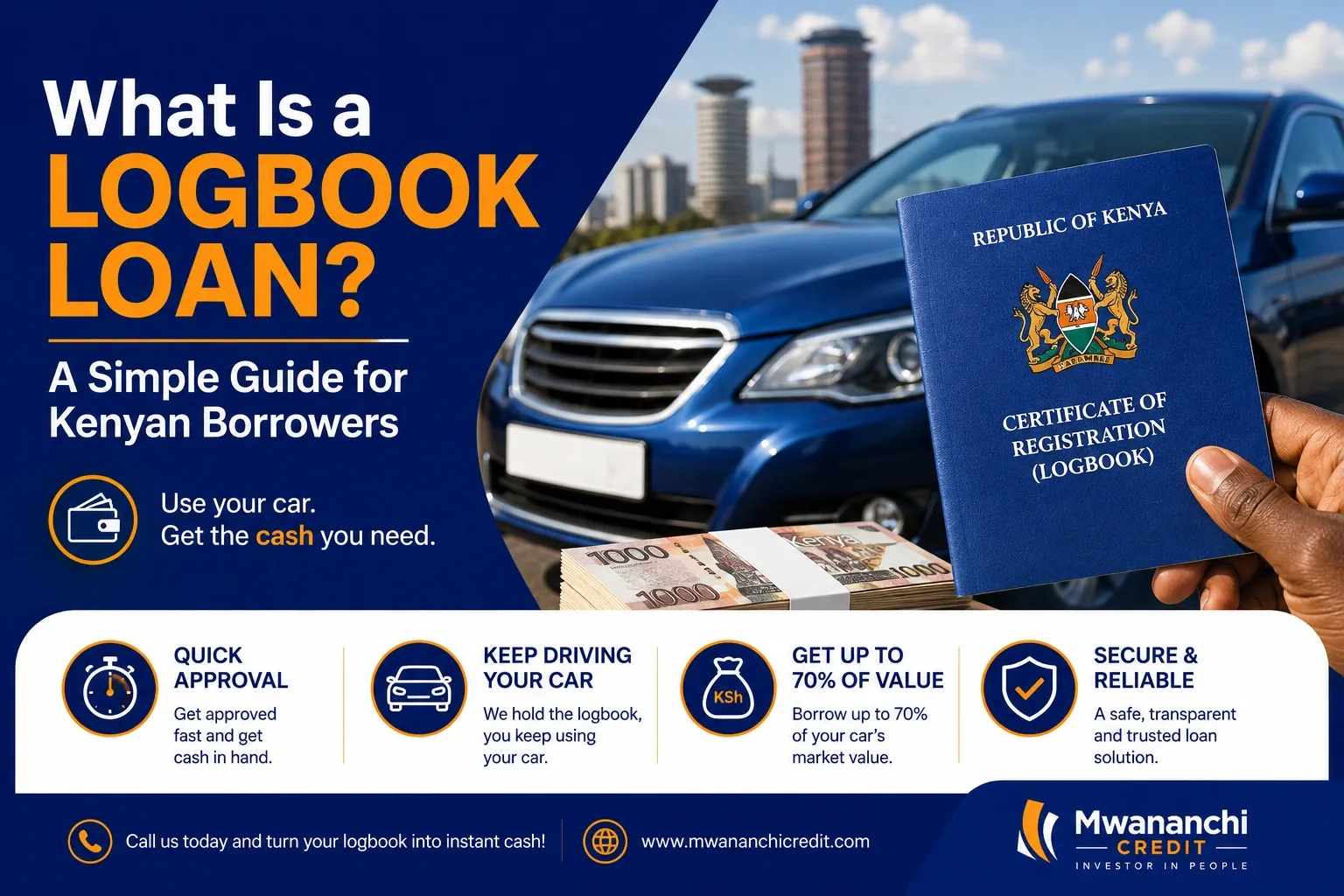
What Is a Logbook Loan? A Simple Guide for Kenyan Borrowers
If you’re unfamiliar with the term “logbook loan,” you might be wondering what it entails. You’re not alone. Many Kenyans are interested in this form of financing but don’t know how it works. This is a simple guide to it.
What Is a Logbook Loan?
Logbook loans are secured lending products. A logbook loan is a loan that uses your car as collateral. Lenders use your car’s logbook – the official ownership document – as security.
What does this logbook loan mean look like in practice? You will continue to drive your car. It is just interest that the lender registers on it. Once you pay off the loan, you eliminate interest, and you own your logbook once more.
To put it simply, it is a vehicle-based loan. It is the equity in your vehicle and not your paycheck that’s important.
How Does a Logbook Loan Work?
Let’s take a look at how logbook loans work, step by step:
The first step involves applying and submitting your papers. After that, a valuer inspects your car and determines its market value. The lender, based on that value, provides you with a loan amount.
Then, the lender “registers” his or her interest in your vehicle. This is the vehicle logbook as collateral for the process. But you still have the keys in your possession! You could still drive to work, go shopping or for business.
Lastly, you pay back the debt in fixed periodic payments. At the end of the payoff, the lender deducts their interest, and you are free and clear.
This is also a different type of bank loan than a standard bank loan. Banks typically base their lending on your income and credit record. A logbook loan puts the focus on your car, rather than.
Why Is a Vehicle Logbook Used as Security?
When a lender gives out money, there is always a need for protection. This is the case with any type of loan, secured or not.
A car’s value is security when you are borrowing against a car. When the borrower cannot afford to pay, the lender has a right of recourse to the car. This is the reason why it is referred to as a secured loan.
This security means that a lender may be able to approve applications sooner. In addition, they are not as reliant on your income history. It is for this reason that this form of logbook financing has become trendy in Kenya.
Who is Eligible for a Logbook Loan?
Anyone can qualify for a logbook loan. In general, you are eligible if:
- You are the registered owner of your car in your name.
- The car is in fair, roadworthy condition
- It’s possible to present some sort of income or repayment capacity
- Your logbook does not contain any unresolved disputes.
The following people are usually eligible to apply:
- Salaried staff,
- Self-employed people
- And smaller business owners.
It’s not your job title that determines the value of the vehicle, but what it is.
Typical Documentation?
While the requirements will differ between lenders, most will request:
- A national ID
- Your KRA PIN
- The original logbook of the car.
- Proof of income – e.g. payslips or bank statements
- Valid comprehensive insurance
These are handy to have on hand to make that process much quicker.
How Much Can You Borrow Against a Vehicle?
This will vary according to the value of your car. Typically, lenders will not loan the full amount, but will provide a percentage of that value.
Many factors affect this figure. These include the age, condition, make and model of your car. The more modern and well-kept the car is, the greater the unlock. Older cars are typically eligible for a lower percentage.
You can also have a part in your ability to repay. So, lenders don’t only take a look at the vehicle. They also check if you’re able to make repayments work too.
What is Involved in the Repayment of a Logbook Loan?
Repayment typically takes place in fixed monthly payments. Both principal and interest are covered. Also, they are divided over the course of a set term.
There are borrowers who repay their loans in a couple of months. Others would like to have long periods with smaller monthly payments. But no matter what, it’s crucial to select a term that is manageable within your budget.
When the last payment is received, the lender has no more interest in the vehicle. Your logbook at that time is completely free once more.
What Happens If You Cannot Repay the Loan?
An important question to ask before borrowing is. A logbook loan is secured; therefore failing to make payments has consequences.
It’s usually the penalties for late payments that come first. The lender can eventually repossess the car if it fails to receive payments. Generally, this is a step taken as a last resort rather than a first.
However, it is a risk that needs to be fully understood. When considering a signature, be sure to understand what will occur if it is hard to pay back.
What Should You Consider Before Taking a Logbook Loan?
As you’re getting ready to commit, consider the following:
- Are you able to make monthly repayments easily?
- Have you considered all the interest and fees?
- Does your vehicle’s value qualify for your loan?
- Have you read the conditions for non-payment?
Answering these questions can help you make a responsible loan and prevent additional stress later on.
Logbook Loan vs. Other Types of Vehicle Financing
A logbook loan isn’t the only means of obtaining cash for a vehicle. It is important to know what it is.
For instance, asset financing is normally utilized to acquire a car, but you never borrow against it. Unsecured personal loans, meanwhile, don’t have any collateral requirements whatsoever. But typically they do have more stringent income requirements and lower borrowing limits.
A logbook loan is in the middle. It has more borrowing power than unsecured credit. Moreover, at the same time, you can retain and continue to use your current vehicle for the duration of your loan.
FAQ’s
Is a logbook loan similar to a car being sold?
No, it does not pass to the other party while you are making the loan. The lender’s interest is registered on the logbook, not ownership of the logbook.
Is it possible to drive their car during the loan?
Yes. You are responsible for taking care of the vehicle for the entire loan period.
Will a logbook loan impact my credit score?
It can, depending on the lender and how consistently you repay. Regular payments tend to boost a better credit rating.
Could it be dangerous to use a logbook loan?
As with all secured loans, it does have its risks if repayments are not carefully managed. Knowing the conditions in advance can greatly minimize that risk.
What is the difference between a log book loan and a bank loan?
Typically, a bank loan will be based on your income and credit. A log book loan is based primarily on the value of your vehicle, making it easier to qualify for.