


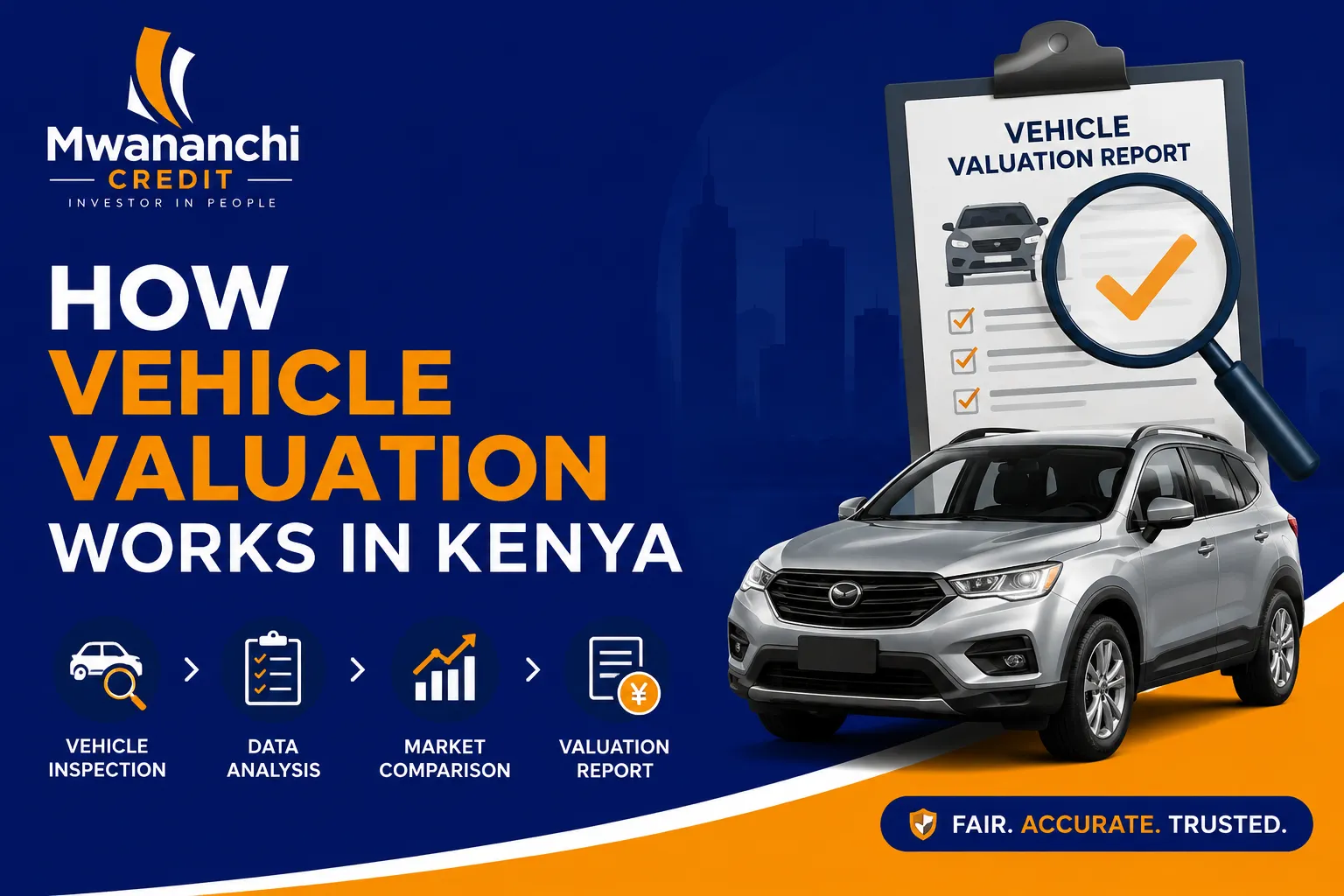
How Vehicle Valuation Works in Kenya
Vehicle valuation is the process of determining the value of a vehicle in the present market. An expert valuer examines the car. Afterwards, they consider things such as age, make, model, mileage, condition, demand, and so on. This outcome benefits buyers, sellers, insurers and lenders in making sound financial decisions.
Vehicle Valuation – What is it?
The value is NOT the price tag. The cost listed for a car may be different from the actual market value. This is because the sale price of similar vehicles determines market value, not what a seller is looking for.
Why is that important, then? There are several reasons why vehicles require valuation: insurance, resale, transfer of ownership and financing. A qualified valuer typically carries out this assessment, backed up by market data and a physical inspection.
How Does a Vehicle Valuation Work?
Valuation isn’t guesswork. We structured it well. Typically, it’s a scenario like this:
- Vehicle inspection. The first step is that the valuer inspects the car in person.
- Inspect the year, make and model. This information influences demand and the rate of depreciation.
- Assess the mileage. The more miles on the car, the less its resale value is likely to be.
- Check the vehicle condition. Next, the valuer looks at the exterior, interior, mechanical condition and overall maintenance.
- Review the market prices. The analyst then compares the car with other similar cars sold in Kenya.
- Consider market demand. The more popular the model, the more likely it is to have a higher resale value.
- Prepare a valuation. Lastly, the valuer gives an estimate of the current market value.
This incremental process provides a realistic and defensible number, rather than an estimate.
What Factors Affect Vehicle Value?
Numerous factors influence the value of a vehicle. The following table categories them into the most important ones.
| Factor | How It Can Affect Value |
| Make and model | Drives demand and resale potential |
| Vehicle age | Older vehicles usually depreciate |
| Mileage | Higher mileage can reduce value |
| Condition | Well-maintained cars tend to retain more value |
| Service history | Shows how well the vehicle was cared for |
| Accident history | Major damage can lower market value |
| Modifications | Some changes may reduce buyer interest |
| Market demand | Some changes may reduce buyer interest |
| Ownership documents | Clear paperwork supports a reliable assessment |
All these factors make a complete picture of the value of a vehicle and not just one factor.
Market Value vs. Forced-Sale Value
The difference between the two is important to understand because they refer to two separate concepts. And if you are not aware of that difference, it can be misinterpreted.
Market value is the value that an item would likely fetch on a normal market. This presupposes a willing buyer, a willing seller and sufficient time to get the right buyer. There is no pressure, as the seller can wait for an offer that is not too good to miss.
Forced-sale value is used for a car that must be sold within a matter of days and not weeks or months. This may occur when there is an immediate need for cash, at a repossession, or at an auction. Because there is limited time, the seller will have less leverage to negotiate. So the vehicle will usually be sold for less than the market rate.
What is causing this divide? The faster, the more expensive. If a buyer is aware of a sale, he or she has more leverage and the price will inevitably decline. That gap is generally larger the greater the time constraint.
In the real life of a few situations, it does matter that there’s a difference. Market value provides a more accurate estimate of the cost to replace a car if you’re insuring one. In the event that you need to sell a vehicle as collateral for financing, it may not be worth the vehicle’s normal market value. In either case, being familiar with the figures will make you feel more confident about reading any valuation report you view.
How Does Vehicle Valuation Affect Financing?
If a vehicle has been financed, then the value that was placed on it for financing may be taken into account. But that’s not the whole story. Before making an offer, lenders will also check repayment capacity, ownership and title documents, existing encumbrances etc.
To sum up, a good valuation can certainly assist, but you cannot simply rely on the valuation to secure a particular loan. For complete information on financing decisions, read up on logbook loan requirements and apply for a loan.
Example of a Vehicle Valuation
Let’s take one of those simple examples. Let’s assume that a similar vehicle is currently being sold for approximately KSH 1.2 million. The valuer then values the particular car based on its age, mileage, condition and its service history. The final value of the car may be different from the advertised value due to the fact that each car is unique in terms of condition and history.
How to Prepare for a Vehicle Valuation
Just a bit of preparation makes a big difference. Presenting a car with good paperwork and a proper appearance is likely to get a positive and honest evaluation. How to be prepared:
- Clean the vehicle inside and out. Easy to inspect and a good initial impression.
- Keep your service records on hand. Proper care is assured by a documented history.
- Gather your ownership documents. Carry your logbook and ID card.
- Confirm the vehicle is running well mechanically. Resolve minor problems before they occur – worn wipers or warning lights.
- Disclose any major repairs or accident history. This is the best way for the valuer to arrive at the correct valuation.
- Remove unnecessary modifications. Changes after the factory fit may not be of added value.
- Make the vehicle available for physical inspection. Make sure it is available on the scheduled day.
The actions that you take will not alter the core of what your car is, but will help the valuer to gauge it fairly.
FAQs
How long does a vehicle valuation take?
The typical valuation can be done within a few hours most times, depending on the vehicle and the type of inspection.
What documents may be needed for a vehicle valuation?
Generally, a logbook along with valid identification will be required.
What factors affect a car’s valuation?
All factors from make, model, age, mileage, condition, service history, and market demand help determine.
Does mileage affect vehicle values?
Yes. If you have higher mileage, you are likely to have more wear and tear, and this could decrease the estimate.
Can vehicle conditions change its valuation?
Absolutely. An unblemished vehicle will have a higher value than one that has obvious signs of wear or some mechanical problems.
Can I use a vehicle valuation for financing?
Yes. Valuation is one component among many that lenders consider for logbook loan applications.
Explore More
Want to understand the full financing picture? Check out these related guides: